



GovCon & Public Sector
Marketing & Selling Cybersecurity to Public Sector, Government, Federal, and Critical Infrastructure
Selling cybersecurity and IT services to the federal government and national security organizations is much different than selling in the commercial space. Join a 1-day event - held on Monday, November 16th - created just for those in business development, sales, capture, growth, and marketing to the government and critical infrastructure!
Government Buyer Insights
Learn how government buyers evaluate solutions, build trust, and navigate procurement, compliance, and mission requirements.
Practical Gov/Fed GTM
Get real (and realistic) ideas for positioning, FedRAMP, regulated markets, partnerships, AI, and public sector growth.
Peer Connections
Connect with marketers, sellers, growth leaders, and partners who understand the realities of government GTM.

Connect Public-Sector Strategy to Channel, Field, PMM, and Demand
Selling cybersecurity and IT services to the federal government and national security organizations is much different than selling in the commercial space. Join a 1-day event - held on Monday, November 16th - created just for those in business development, sales, capture, growth, and marketing to the government!
GovCon 2026 Speakers
Our speakers are experienced government sales, growth, and marketing professionals.

Juliana Slye
Founder and CEO
Government Business Results

Joyjit Roy
Principal Technical Program Manager
Kforce Inc.

Ingrid Velasquez-Woodley
Senior Director of Revenue Strategy
38North Security

Cyrus Walker
Founder and CEO
Data Defenders

Venkata Kartheek Reddy Somasani
Information Technology Security Engineer
City of Dallas

Samaresh Kumar Singh
Principal Engineer - Distributed Systems, Edge AI and AI Governance
HP Inc.

Marissa Salzone
Director of Marketing
Echelon Risk + Cyber
See the 2026 GovCon Agenda Below!
Topic Overview
FedRAMP 20x is triggering a wave of “it’s easier now!” messaging — and it’s going to backfire.
20x doesn’t magically reduce effort; it moves the burden upstream from documentation theatre into engineering reality: continuous signals, continuous change visibility, continuous vulnerability response. That shift changes what buyers need to hear, what proof they’ll ask for, and how your marketing and sales motions should work.
In this session, I’ll break down how we’re positioning FedRAMP 20x at 38North Security to create demand without overpromising: the narrative, the content architecture, the ABM approach, and the practical GTM assets that convert “confused & stalled” teams into discovery calls.
You’ll leave with messaging frameworks, a content blueprint, and a simple way to build credibility in a market that’s drowning in hot takes.
Speakers
Session Agenda
- A clear “Rev 5 vs 20x” narrative that doesn’t oversimplify (“less paperwork ≠ less work” + how to say it without scaring buyers off).
- A practical message map: what leaders care about vs what practitioners care about (and how to bridge them).
- A content system that creates conversion: “Start Here” → deep dives → proof assets → consult CTA (not just blogs for vibes).
- An ABM play you can copy: segmentation + 6-touch journey structure + outreach pairing that warms accounts without burning lists.
- What proof looks like in 20x (and what marketers should stop claiming until product/ops can actually deliver it).
Topic Overview
AI adoption in cybersecurity is accelerating, but many organizations struggle to translate technical innovation into clear business value. Based on real-world enterprise deployments across regulated industries, this session explores how AI-driven security automation improves resilience, strengthens brand trust, and supports executive-level risk narratives.
In this session, we will examine how agentic AI frameworks in modern SOC environments affect customer confidence, operational maturity, and strategic differentiation. Attendees will gain practical insights for aligning AI-powered security initiatives with marketing, trust, and growth objectives.
Speakers
Session Agenda
- 1. How AI-driven SOC automation strengthens brand trust and customer confidence
- 2. Translating technical AI investments into executive-level business value messaging
- 3. Aligning security innovation with GTM and trust positioning
- 4. Governance-aware AI as a differentiator in regulated industries
- 5. Lessons learned from production AI deployments in financial and insurance sectors
Topic Overview
Municipal water infrastructure has become a prime target for cybercriminals, nation-state actors, and insider threats, making cybersecurity not just an IT concern, but a critical public health imperative. The 2021 Oldsmar, Florida incident, where a hacker attempted to poison a city's water supply by manipulating chemical levels remotely, and the Maroochy Shire breach that released millions of gallons of raw sewage, serve as stark reminders of what is at stake when water utilities remain unprotected.For cybersecurity professionals working on the go-to-market and business side of the industry, water utilities represent one of the most compelling and underserved market opportunities today. Thousands of municipal water systems nationwide operate with aging infrastructure, limited security budgets, and minimal OT specific expertise, creating both significant risk and significant demand for scalable, practical cybersecurity solutions.This session draws from real-world implementation experience securing water infrastructure for the City of Dallas, covering freshwater treatment plants, wastewater facilities, and flood control systems serving 3.5 million residents. Attendees will gain firsthand insight into how defense in depth strategies, including network segmentation, zero trust architecture, AI powered anomaly detection, and secure remote access, were successfully deployed across legacy operational technology environments without a single moment of unplanned downtime.Beyond the technical framework, this presentation unpacks the unique challenges of selling and marketing cybersecurity solutions to water utilities: navigating procurement cycles, communicating risk to non-technical municipal executives, and aligning solutions with regulatory mandates such as NIST SP 800-82 and ISA/IEC 62443.Whether you are crafting go-to-market strategy, building sales narratives, or developing content targeting critical infrastructure clients, this session delivers actionable intelligence to help cybersecurity organizations position their solutions effectively in one of the most important and fastest growing verticals in the industry.
Speakers
Session Agenda
- 1. Understanding how municipal water utility decision makers think, what drives their purchasing decisions, and how to navigate complex public sector procurement cycles to position cybersecurity solutions effectively.
- 2. Translating OT and ICS cybersecurity risks into business value language that resonates with non-technical municipal executives, city councils, and budget approvers to accelerate sales conversations.
- 3. Applying real world proof points from the City of Dallas securing critical water infrastructure for 3.5 million residents, demonstrating how documented outcomes and zero downtime deployments build buyer confidence and trust.
- 4. Leveraging compliance mandates such as NIST SP 800-82 and ISA/IEC 62443 as natural entry points for cybersecurity vendors and aligning marketing messaging and sales narratives around regulatory urgency.
- 5. Sizing the water utility cybersecurity market opportunity, including thousands of underserved small and mid-sized utilities lacking dedicated security resources, and crafting scalable go-to-market strategies to reach them effectively.
Topic Overview
Most cybersecurity firms compete on the same claims: advanced detection, rapid response, superior technology. The result is a market where every vendor sounds identical and differentiation lives almost entirely in marketing spend. I built a different kind of firm.
Data Defenders serves municipalities, counties, nonprofits, and healthcare organizations, the organizations most cybersecurity vendors do not pursue. Six years ago, I entered into a managed security engagement with a mid-size Illinois city. I designed the governance architecture, managed dual IT and OT operations, and ran the program from implementation through sustained operations. That engagement produced 35,331 threats detected and mitigated, 351 high-severity threats eliminated, zero major security incidents declared, and operating costs 77% below what an equivalent in-house Security Operations Center would have required.
Those are not marketing claims. They are documented operational outcomes, and they have produced the thing most cybersecurity firms spend their entire marketing budget trying to manufacture: proof.
This session examines what six years of operating in the market nobody builds for teaches about firm positioning, client delivery, and the strategic value of doing the work before writing the case study.
Speakers
Session Agenda
- 1. Why municipalities, nonprofits, and healthcare organizations represent a defensible, structurally underserved market and the firm-building case for pursuing the clients your competitors skip.
- 2. What a six-year managed security engagement in a mid-size U.S. municipality actually produced, with specific outcome data across threat detection, severity elimination, incident performance, and cost economics.
- 3. The governance architecture that made a dual-scope (IT + OT) municipal engagement sustainable and what cybersecurity firm CEOs can extract from it for their own client delivery models.
- 4. Why documented operational proof is a more durable differentiator than product feature marketing, and the specific conditions that allow a firm to claim it credibly.
- 5. The strategic positioning case for building a cybersecurity firm with a defined, underserved market rather than competing on brand volume in the enterprise segment.
Topic Overview
What if your newest “employees” could onboard instantly, retain institutional knowledge, collaborate across departments, and scale your team’s expertise 24/7?
In this session, Juliana Slye of Government Business Results (GBR) will demonstrate how GBR is building an interconnected ecosystem of custom GPTs that function like specialized digital team members across marketing, proposal development, operations, research, and business growth.
These GPTs go far beyond simple chatbots. Juliana has developed role-based AI systems, including a Go-To-Market Strategist, Federal Product Marketer, Copy Editor, Brand Assistant, and even a “Condenser” designed to simplify overly complex or lengthy content. Each GPT is built with a distinct function, voice, workflow, and expertise area, allowing them to work independently or collaboratively as part of a layered AI operational framework.
Rather than using AI as a standalone tool, GBR has developed GPT systems that build on one another to create scalable workflows that accelerate onboarding, improve consistency, reduce bottlenecks, and preserve institutional knowledge across the organization.
Attendees will learn how to design GPTs that mirror real employee functions, create AI systems that collaborate together effectively, and establish a practical framework for scaling expertise across a growing organization without sacrificing quality, brand integrity, or operational efficiency.
This session is designed for GovCon leaders, marketers, operations teams, and growth strategists who want to move beyond AI experimentation and into practical implementation that drives measurable business impact.
Speakers
Session Agenda
- How to structure GPTs as specialized “AI employees” with defined business functions
- The difference between standalone GPTs and layered AI systems that collaborate together
- Practical lessons learned from implementing GPT workflows inside a GovCon-focused organization
- A roadmap for organizations wanting to scale operations with often limited resources
Topic Overview
There's a moment every marketing leader knows: your team is talented, your campaigns are running, and somehow the CEO still isn't sure what marketing is actually doing for the business.
This session is about making sure that moment never happens again.
The framework is built around two connected tools: a KPI-driven strategic roadmap and a quarterly marketing review (QMR) that together become the operating system for your entire marketing org. The roadmap is built from the top down: executive business goals translated into channel-level KPIs that every team member owns. The QMR is where those KPIs are reported, defended, and connected back to strategy by everyone.
But the deeper purpose of this framework isn't just accountability. It's orientation. When your team is heads-down in the minutiae, the roadmap is the hundred-thousand-foot view that answers the question every campaign should be asking: does this move our metrics? Creativity doesn't go away. Ideas still matter. But they get filtered through the strategy, not in spite of it.
And for the leader in the room who is the head of marketing with or without the title, this framework does something else entirely. You already operating at the executive level and this proves it. The C-suite, sales, finance, and new leadership will see a marketing org that isn't just executing tasks but executing a vision, with full command of how marketing connects to revenue, operations, services, and growth.
If you want Marketing off the CEO’s worry list, this is how you build the team that makes it possible.
Speakers
Session Agenda
- Attendees will learn how to:
- Build a strategic marketing roadmap anchored in executive goals
- Distribute KPI ownership across your team from intern to vendor
- Design a QMR that unifies siloed teams and earns C-suite trust
- Use the QMR as an onboarding and culture-building tool
- Position yourself as an executive leader through the work you are already doing

"The sessions alone are worth it, but connecting, reconnecting, and making new friends in our quirky industry is priceless."
Becca Chambers
Check Out Our 1-Day and Full Conference Passes Below
GovCon attendees with a Full Conference Pass can attend the rest of CyberMarketingCon:

Zach Deming
VP, Corporate & Product Marketing
Horizon3

Yuliya Gorenko
Influencer Marketing Director
Mischka
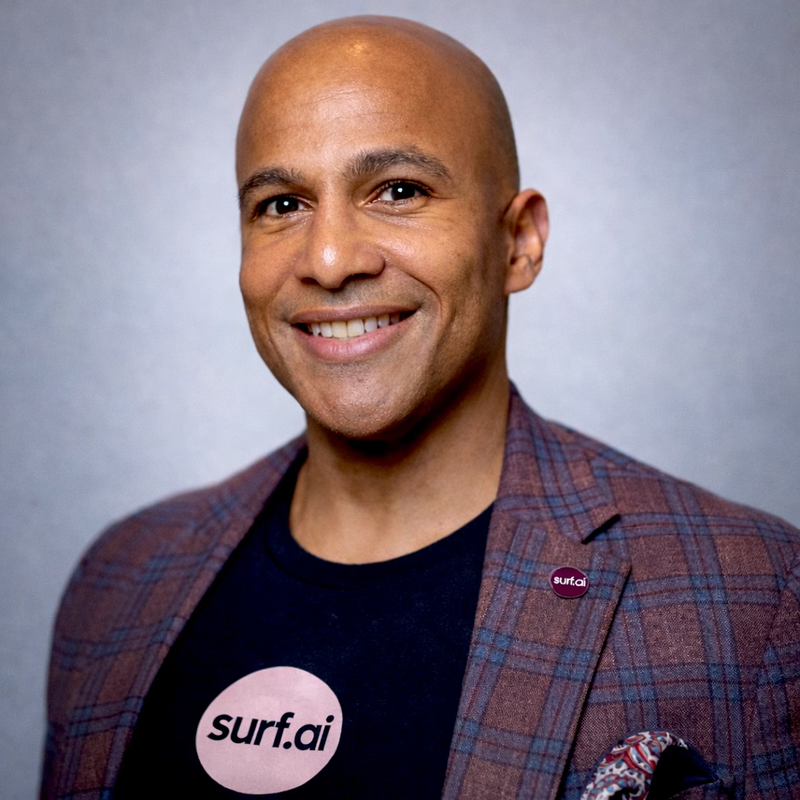
Yonesy Núñez
CISO
Surf AI

Yehuda Cagen
Head of Marketing
Rainscales

Will Jardine
Strategist
Miscreants

Virginia Peterson
SVP, Marketing
ZeroFox
Venkata Kartheek Reddy Somasani
Information Technology Security Engineer
City of Dallas

Varun Prasad
Managing Director, Third Party Attestation
BDO

Valerie Zargarpur
Head of Marketing
Monad

Umang Barman
Sr. Director of PMM
Zscaler

Tony Thompson
Life-Long Cyber Marketer & Chief Marketing Officer
Seemplicity
.png)
Theresa Lanowitz
Cybersecurity Analyst
Omdia

Steve Piper
Founder & CEO
CyberEdge Group

Stephen van der Heijden
Chief Innovation and AI Officer
Sendmarc

Stephanie Corby
VP, Market Lead, IT/Tech Vertical
Future B2B

Solange Deschâtres
Head of Marketing
Energize Marketing

Shlomi Ashkenazy
Positioning Advisor, Head of Marketing
Rein Security

Seth Steinman
VP, Marketing
PreVeil

Scott Johnson
Founder
Amplifyed

Sarah Wallek
Head of Demand-Gen
Jazz

Sameer Sait
CISO
Stanley 1913
Samaresh Kumar Singh
Principal Engineer - Distributed Systems, Edge AI and AI Governance
HP Inc.

Saikrishna Chavali
Product Marketing

Ron Eddings
Founder and Chief Executive Officer
Hacker Valley Media

Rebekah McAdams
Vice President, Field, Channel, and Corporate Events Marketing
Varonis
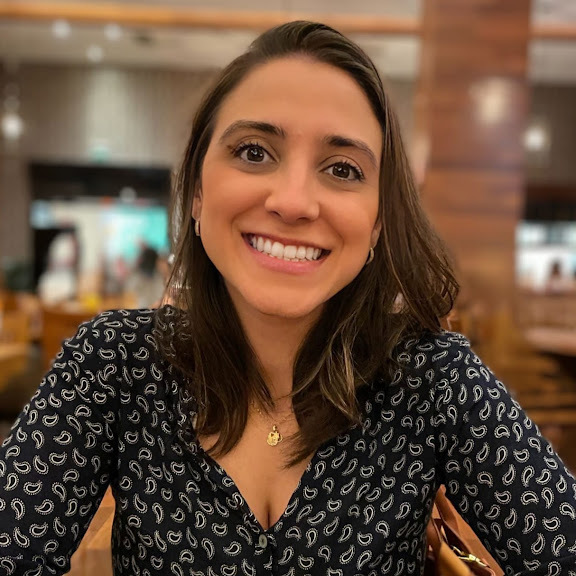
Raquel Arruda
Marketing Manager
KnowBe4
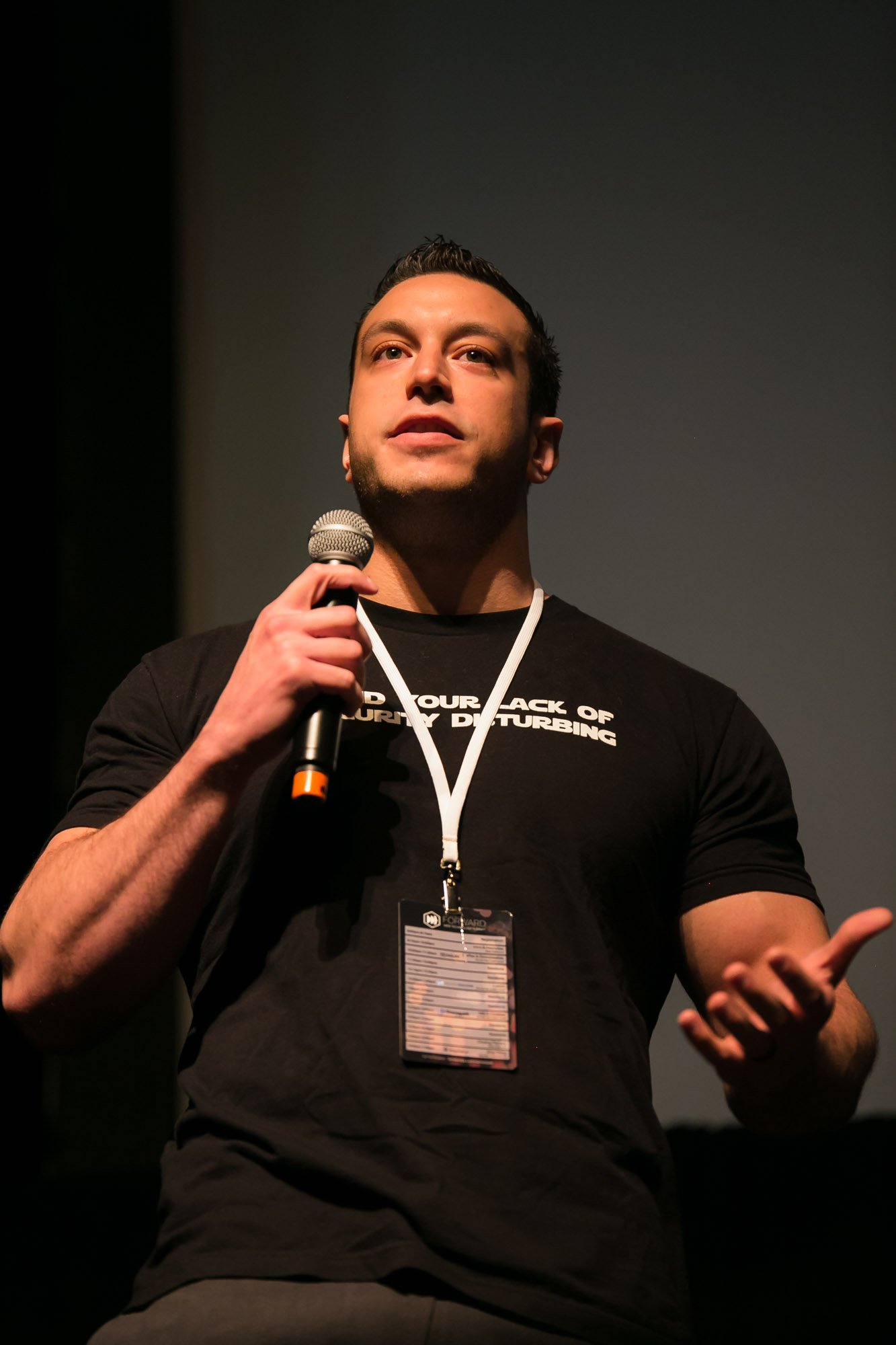
Randall Degges
VP, AI Engineering & Developer Relations
Snyk

Paul Innella
CEO
TDI

Nicole Gates
VP of Global Growth Marketing
Varonis

Nate Burke
Chief Marketing Officer
7AI

MJ Kaufmann
CEO
Write Alchemist

Missi Carmen
Chief Revenue Officer
Safetica

Mike Lyborg
CISO
Swimlane
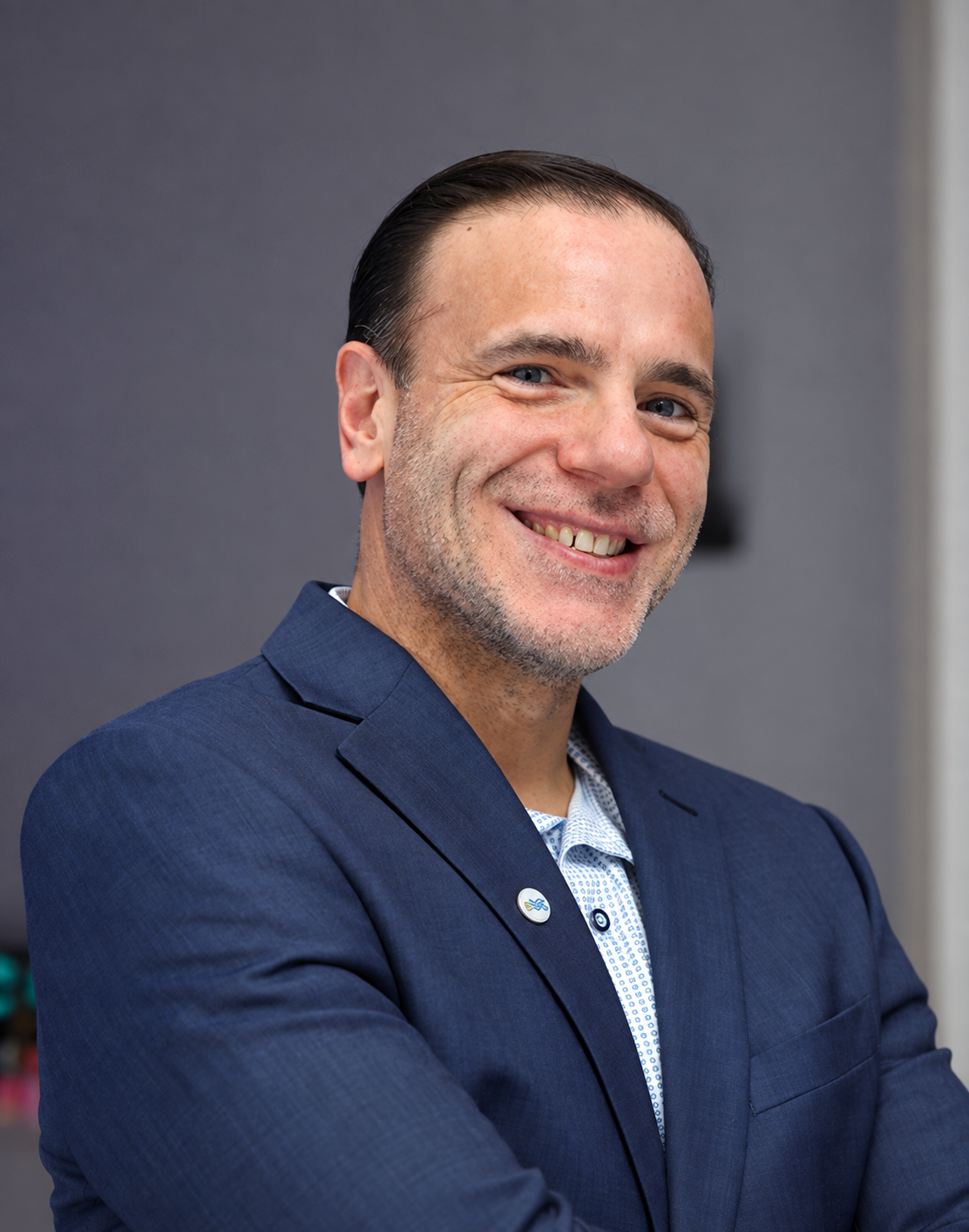
Mike D'Agostino
General Manager
ISMG

Michelle Radlowski
VP, Field & Partner Marketing
Vertex, Inc

Matt Johansen
Social Media Creator
Cybersecurity

Mate Benedek
VP of Marketing
Axoflow

Mary Yang
Chief Marketing Officer / fCMO
Momentum StoryWorks
Marissa Salzone
Director of Marketing
Echelon Risk + Cyber

Mariana Padilla
Community Evangelist
Harmonic Security

Mariana Doncel
Head of Product Marketing
HackTheBox

Maisa Fernandez
Senior Director of Global Partner Marketing
Palo Alto Networks

Madeline Lawrence
Co-Founder & CGO
Aikido Security

Linda Sim
Vice President, Global Growth and Revenue Marketing
Stellar Cyber

Lexi Croisdale
Director of Global Content Marketing
Varonis

Krissy Camacho
Founder & CEO
Tricrest Growth Advisors

Kerry Guard
CEO
MKG Marketing

Kelsea Morrison
Director of Marketing Operations
Varonis

Keith Ward
IT/Tech Content Host
Future B2B/ActualTech Media

Kat Lewis
Chief Marketing Officer
OPSWAT

Kate Turchin
Senior Director of Growth
Atico ATX

Katelyn Holbrook
Chief Client Officer
V2 Communications

Karen Buffo
Chief Marketing Officer
Veracode
Juliana Slye
Founder and CEO
Government Business Results
Joyjit Roy
Principal Technical Program Manager
Kforce Inc.

Joy Hays
SVP, Marketing and Communications
Center for Internet Security

Joseph Blankenship
VP Research Director
Forrester

John Knightly
CMO
Netwrix Corporation

Joe Cicero
Chief Marketing Officer
Security Risk Advisors

Jocelyn Disque
Vice President
Touchdown PR

Jessica Ray
Chief Marketing Officer & GTM Advisor
DTEX

Jeanette Stepanchuk
Co-founder & Head of Demand Gen
Cusp GTM

Jasmin Ozeri
VP of Marketing at Orchid Security | Former Head of Strategic Events at Wiz
Orchid Security Ex-Wiz

Jade Hill
Senior Director, Corporate Marketing
Drata

Jaakko Jalkanen
Head of Marketing
WithSecure
Ingrid Velasquez-Woodley
Senior Director of Revenue Strategy
38North Security
Idan Gol
CMO
OX Security

Hitendar Sethi
Director Product Marketing, AI Security
Palo Alto Networks

Heather Daval
Public Relations
Pentera

Gonçalo Prates
Head of Performance
AdConversion

Gianna Whitver
CEO and Co founder
Cybersecurity Marketing Society

Gerald Auger
Founder
Simply Cyber

Gary Robbins
CEO
FOURCORTERS

Fred Saunders
VP of Marketing
OneTrust

Fari Banimahd-Mansur
Global Campaign Lead - Core Portfolio
CrowdStrike
.png)
Fabi Rocha
Field & Partner Marketing Manager, West Coast & LATAM
Snyk

Eran Kinsbruner
VP of Product Marketing
Checkmarx

Emily Rosenfield
Marketing Director
Fig

Don Jeter
CMO
Torq

Deepika D’Souza
Senior Marketing Communication Manager
Endor Labs

Deb Wolf
CMO
Dataminr

David Spark
Producer/Host
CISO Series

David Koke
Head of Marketing
Intruder

David J Ebner
President
Content Workshop

Danny Miller
Director of Marketing, Check Point Exposure Management
Check Point

Danielle Guetta
VP Marketing
Jazz Security
Cyrus Walker
Founder and CEO
Data Defenders

Courtney Chatterton
Marketing Manager
Miscreants

Confidence Staveley
Multi-Award Winning Cybersecurity Leader
Confidence Staveley

Christine Elswick
Managing Director
Highwire PR

Christine Bartlett
SVP, Marketing
Hack The Box
.png)
Charles Gold
4x Cyber CMO / Founder
CyberG2M Advisors

Caitlin Sarian
Founder and Executive Director
Cybersecurity Girl

Bronwen Hudson
Marketing Lead and Director of Vibes
Reveal Risk

Brittany Cannon
Sr Director of Marketing
Crash Override

Brian Reed
Chief Market Officer
Corsha

Brian Brushwood
Social Engineering Educator & Host
Scam Nation

Brendan Hann
Senior Product Marketing Manager
Snyk
.JPG)
Brandon Hoe
The Early-stage Cybersecurity Marketing Leader
Seed to Series A

Becca Chambers
CMO
Scale Venture Partners
See You Soon!